Blog

  • Day 3—Lechlade to Tadpole Bridge

    Last night was rough.

    Anne and I had walked from our hotel dinner to St Lawrence Church, which was next door. Percy Shelley had written his poem A Summer Evening Churchyard in St Lawrence’s churchyard. We walked along a path beside the church which, according to a sign beside the path, is the Shelley Walk.

    It was twilight. Willow trees and their branches overhung the path and filtered out the remaining daylight. Along the path, gravestones filled the churchyard. Many had toppled over and were weathered smooth and stained grey and green. I pointed out to Anne the gargoyles lining the church’s cornices and doorways.

    I pulled a folded-up copy of Shelley’s poem out of my pocket. I read the first few lines and stopped because, as I told Anne, I felt stupid. She was surprised, so unlike you, she told me. She asked what the poem was about. Death, I told her, and read to her the last two lines of the first stanza:

    Silence and Twilight, unbeloved of men,

    Creep hand in hand from yon obscurest glen.

    We walked back to the hotel and went to bed.

    When Anne is overtired, she sometimes yells while falling asleep. It’s always a quiet yell. But last night, while falling asleep, it was a full-throated bellow. She said that she had dreamed that someone opened the door to our hotel room and bats had poured into the room. 

    The next morning at breakfast she asked what I thought her dream was about. I told her that it was a mistake not to have read to her the poem’s final stanza, which I then read:

    Thus solemnized and softened, death is mild

    And terrorless as this serenest night:

    Here could I hope, like some inquiring child

    Sporting on graves, that death did hide from human sight

    Sweet secrets, or beside its breathless sleep

    That loveliest dreams perpetual watch did keep.

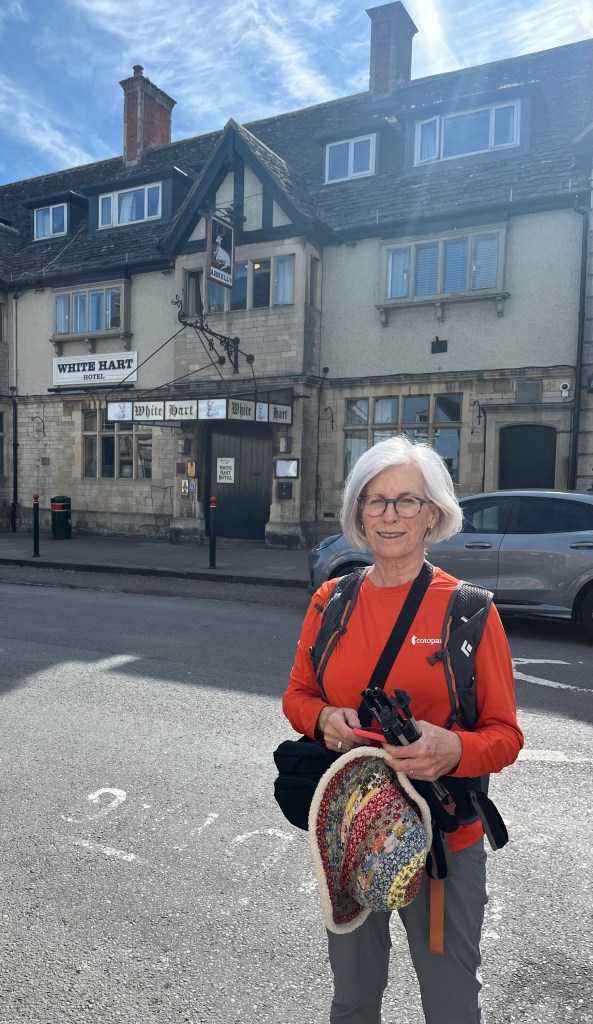
    According to a sign on the hotel, Percy Shelley was also a guest when he had visited Lechlade.

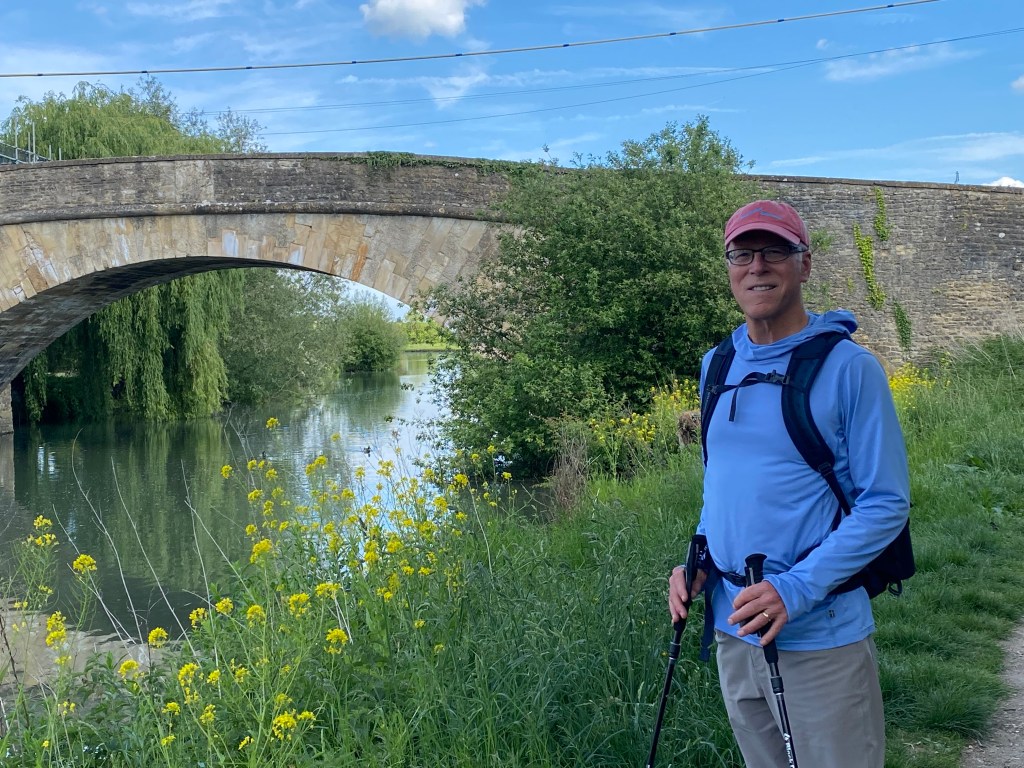
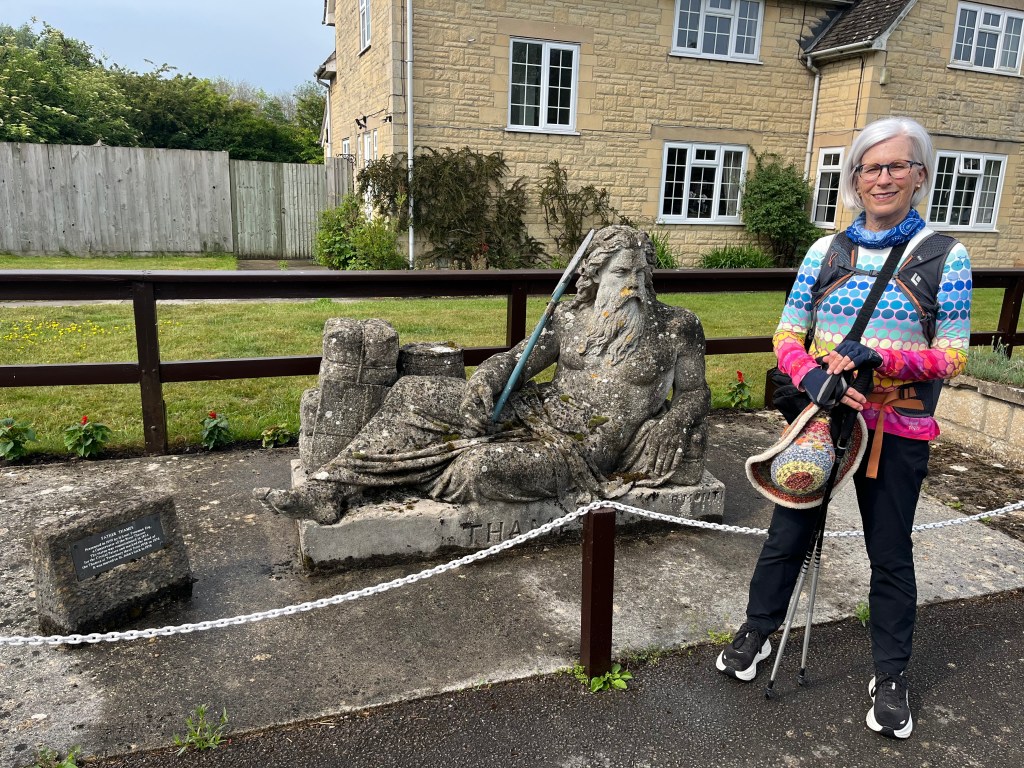
    Today, we walked almost 11 miles to the Tadpole Bridge near Buckland. Much of the walk was along the river, where we saw a well-known statue of Father Thames.
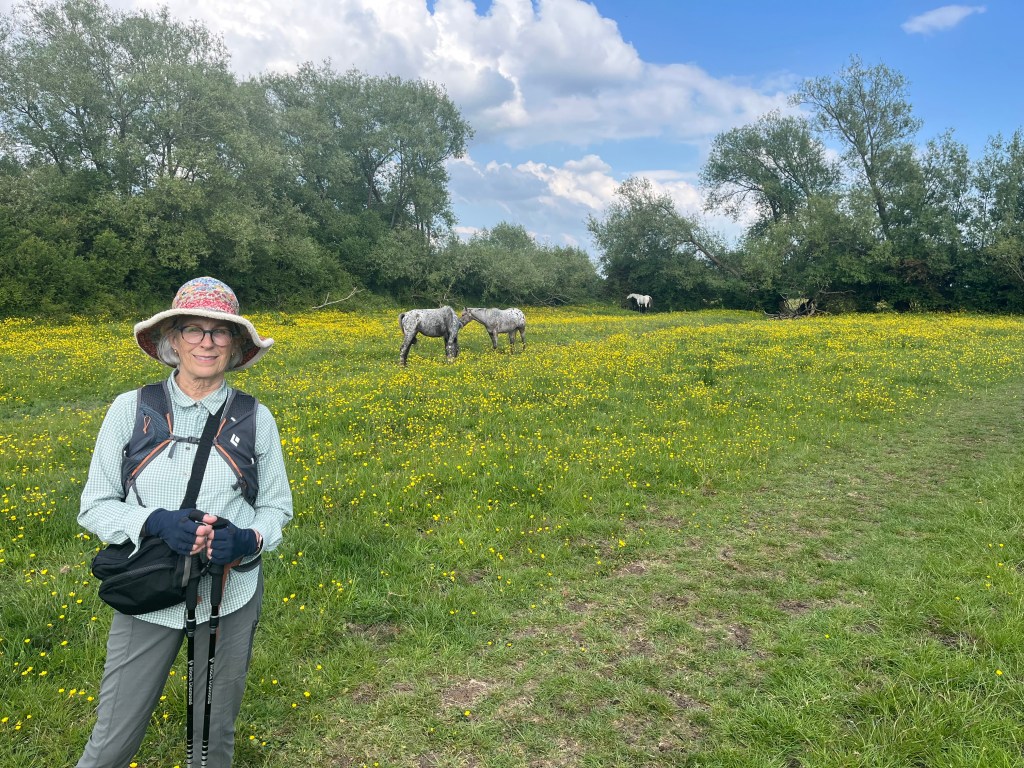
    Much of our walk was through open fields. We have been walking through very rural regions with only a handful of widely spaced villages.
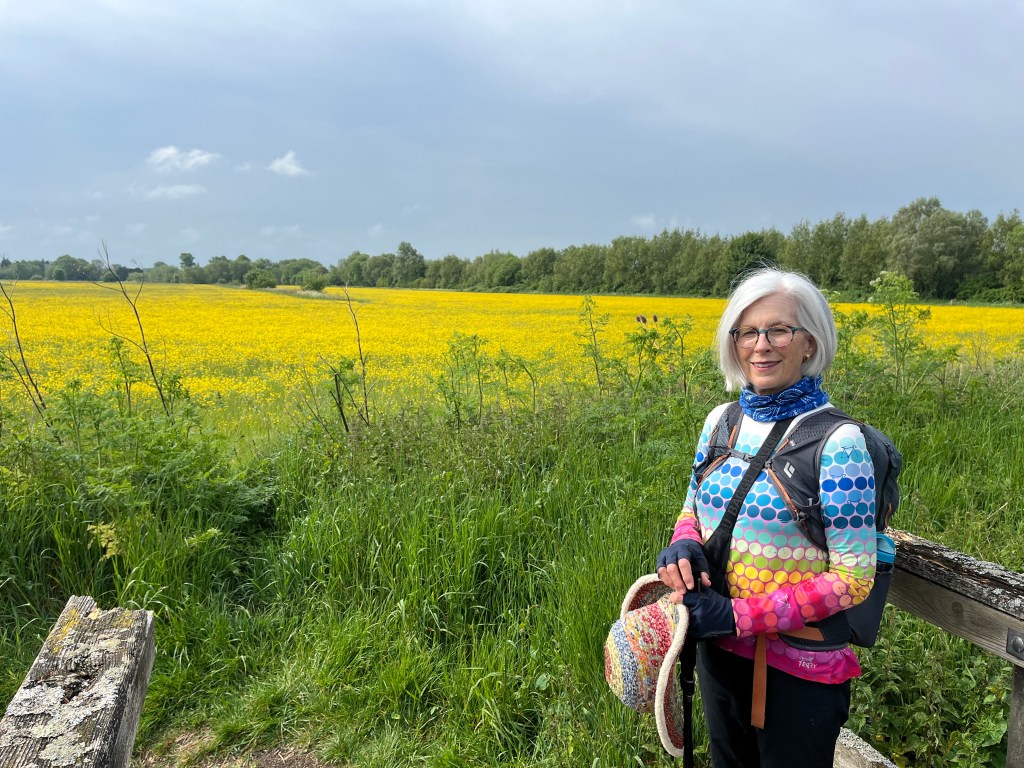
    That night at dinner at the Trout Inn, beside the Tadpole Bridge, I looked at Anne while she wasn’t watching. I do this occasionally—I look at her carefully and see her. And it’s always the same: I am amazed at how beautiful she is. Much has changed in the almost-50 years that I have known her. But when I look at her carefully, what I see hasn’t changed. If anything, that beauty that I see when I look carefully has only deepened. It’s what I hope and expect to see the final time that I look at her. 

    But that is some time off. For now, the river is flowing behind us, and the bats are off in a pasture far away.
  • Day 2—Cricklade to Lechlade

    We have another reasonably long day of walking today—about 11.5 miles. So we are getting an early start from our hotel.

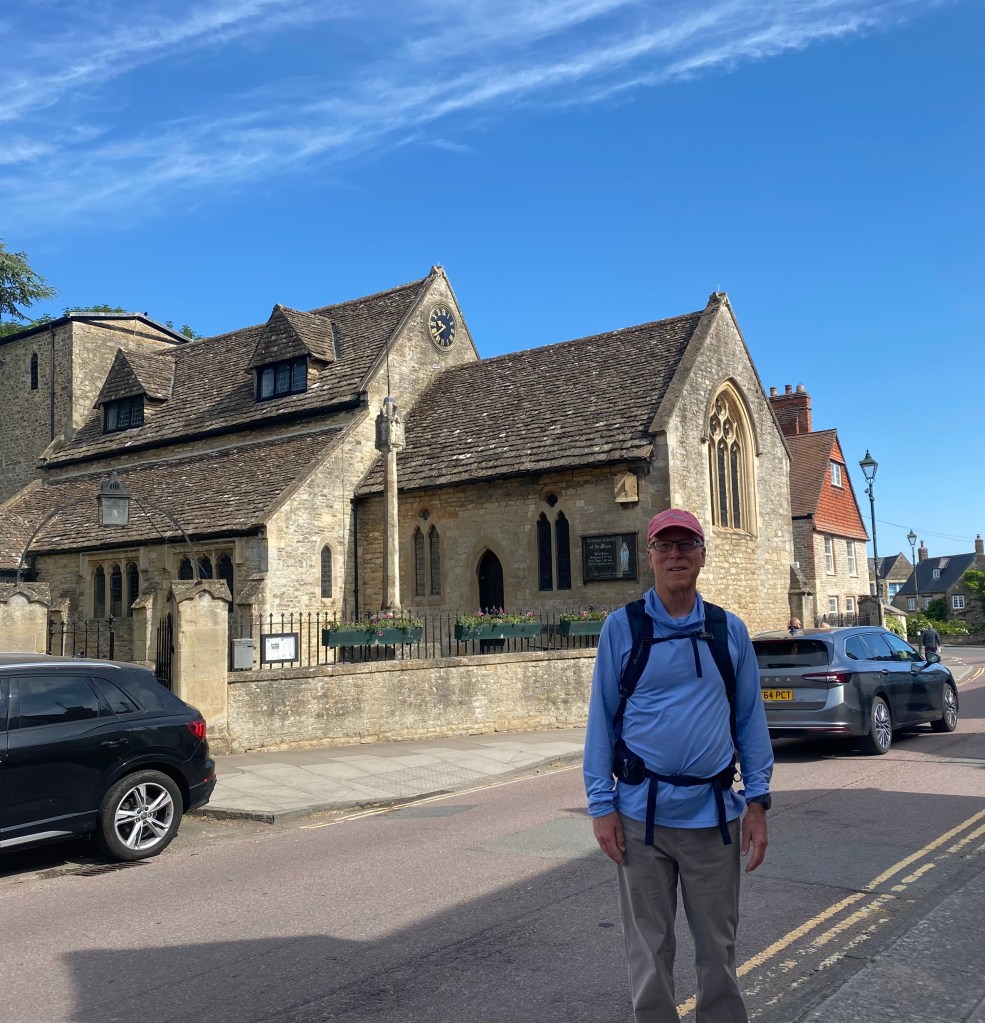
    Before leaving town, we stop briefly at St Mary’s church, which has a sign in front claiming that it is the oldest Catholic Church in England. 

    The Anglican Church declared it redundant and turned it over in 1984. St Mary’s was built over 1000 years ago, and would have been part of the Catholic Church for a considerable part of its history, at least until the Church was destroyed during the English Reformation. About that, a prolific if not eminent historian of England has written, “Generations of religious observance and ceremony, conducted by the river [Thames], were removed at the instigation of a sovereign who cared as little for the sacred history of the river as for the spiritual heritage of the nation itself.” (Peter Ackroyd, Thames, The Biography, p.99.) Substitute some easily substituted words, and another sovereign comes to mind, also disrespectful and destructive of his nation’s deepest and most cherished values, and also a glutton with multiple wives.

    Cricklade is the only town or village of any significance that we have reached since beginning our walk.  And today, there is only the very small village of Castle Eaton until we reach Lechlade at the end of today’s walk. 

    Almost all the walking is through the countryside where the Thames is a narrow stream glimpsed through the foliage.

    The walking is easy. It’s dead flat. There are no climbs. But there are long stretches where the ground is uneven, which makes for slow going.

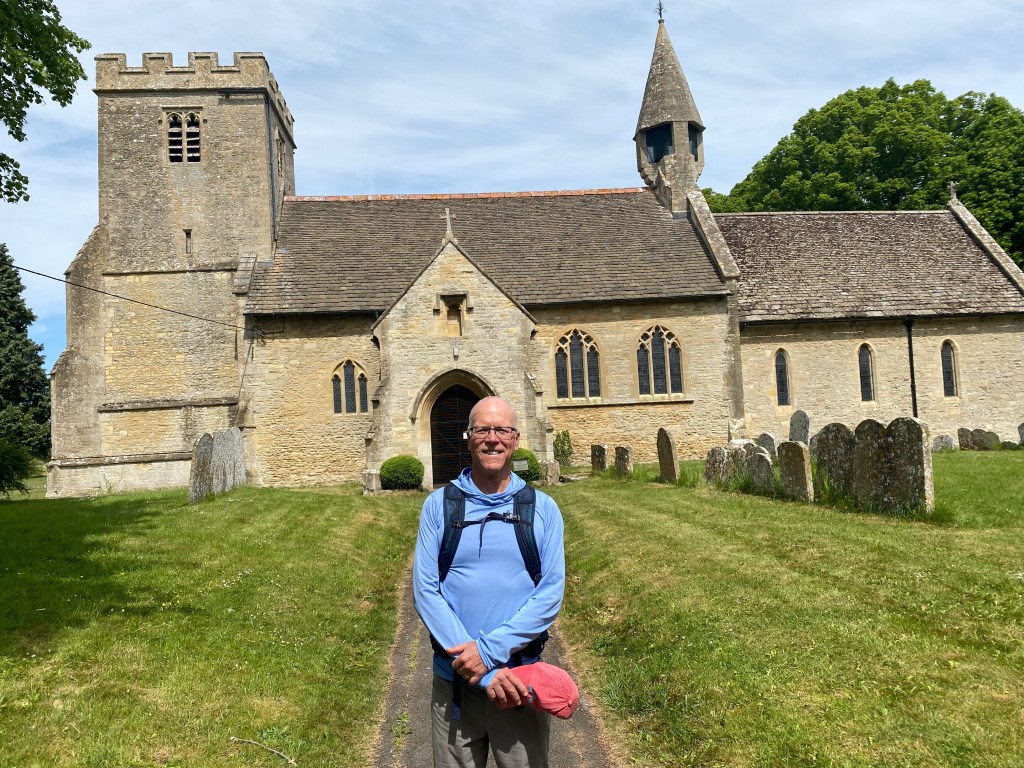
    After walking for several hours, we reach Castle Eaton and go inside the village church, St. Mary’s, built in the late 13th century. 

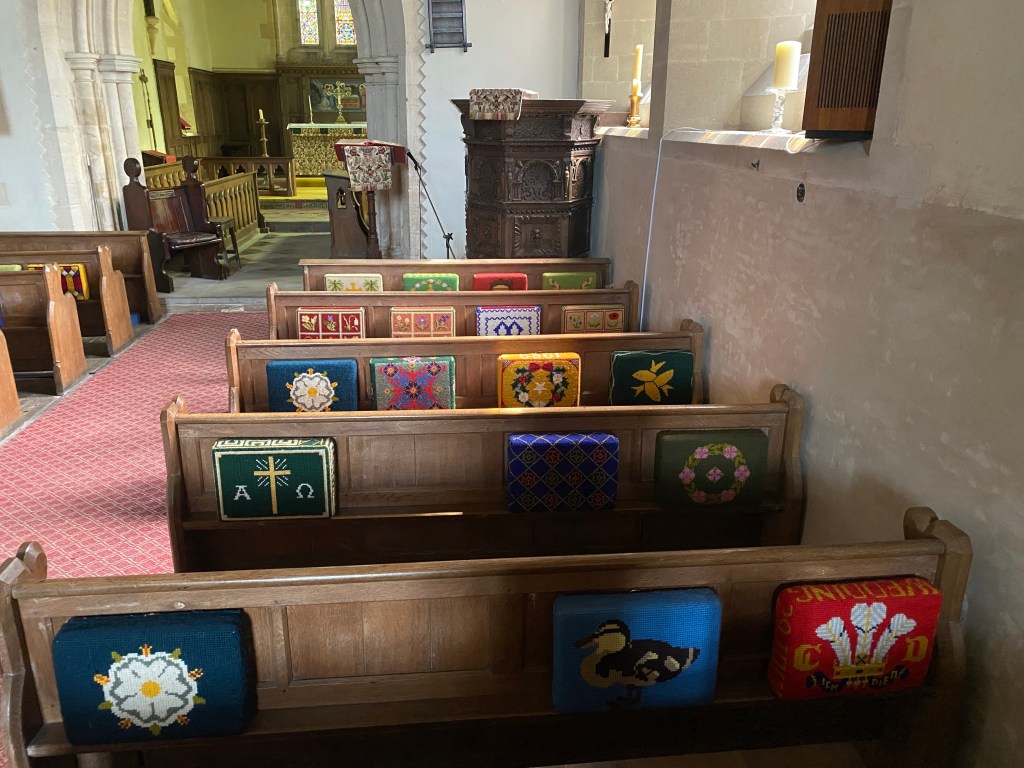
    Cushions with needlepoint covers are stored at each of the pews.

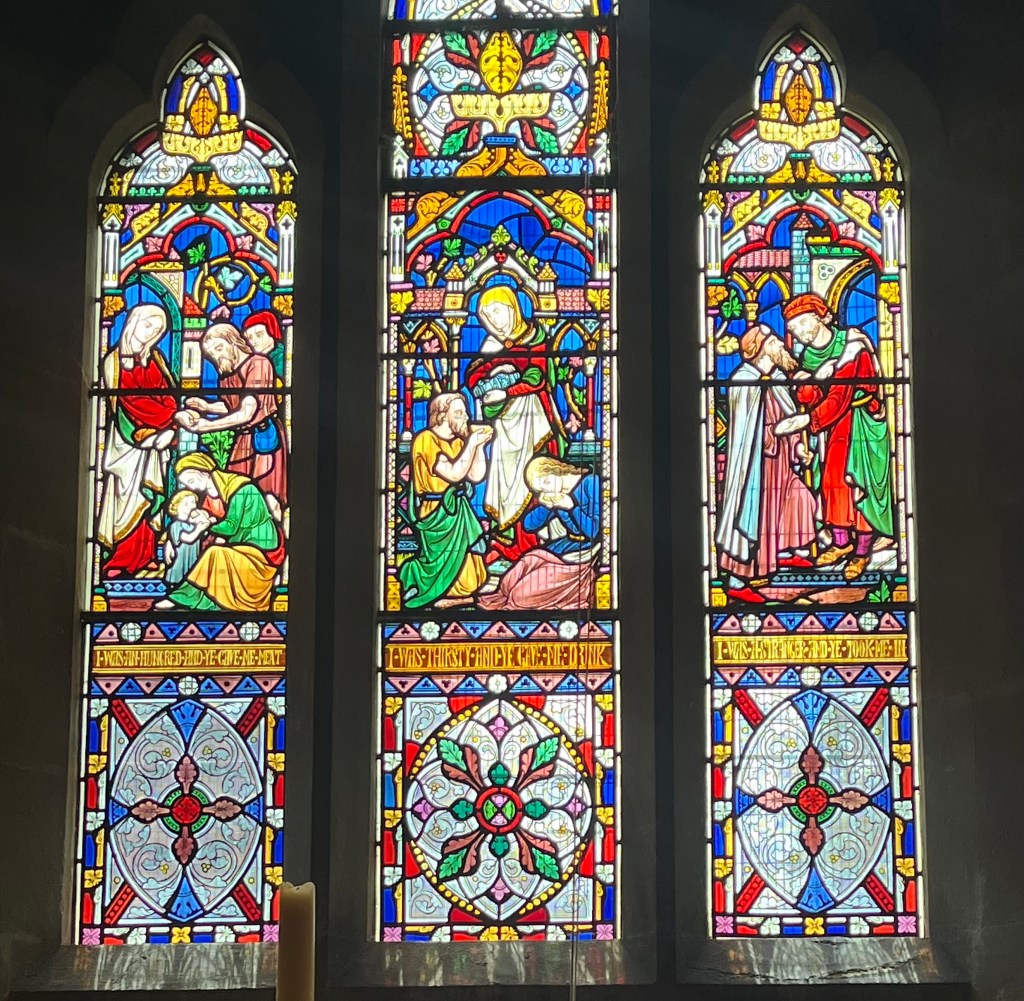
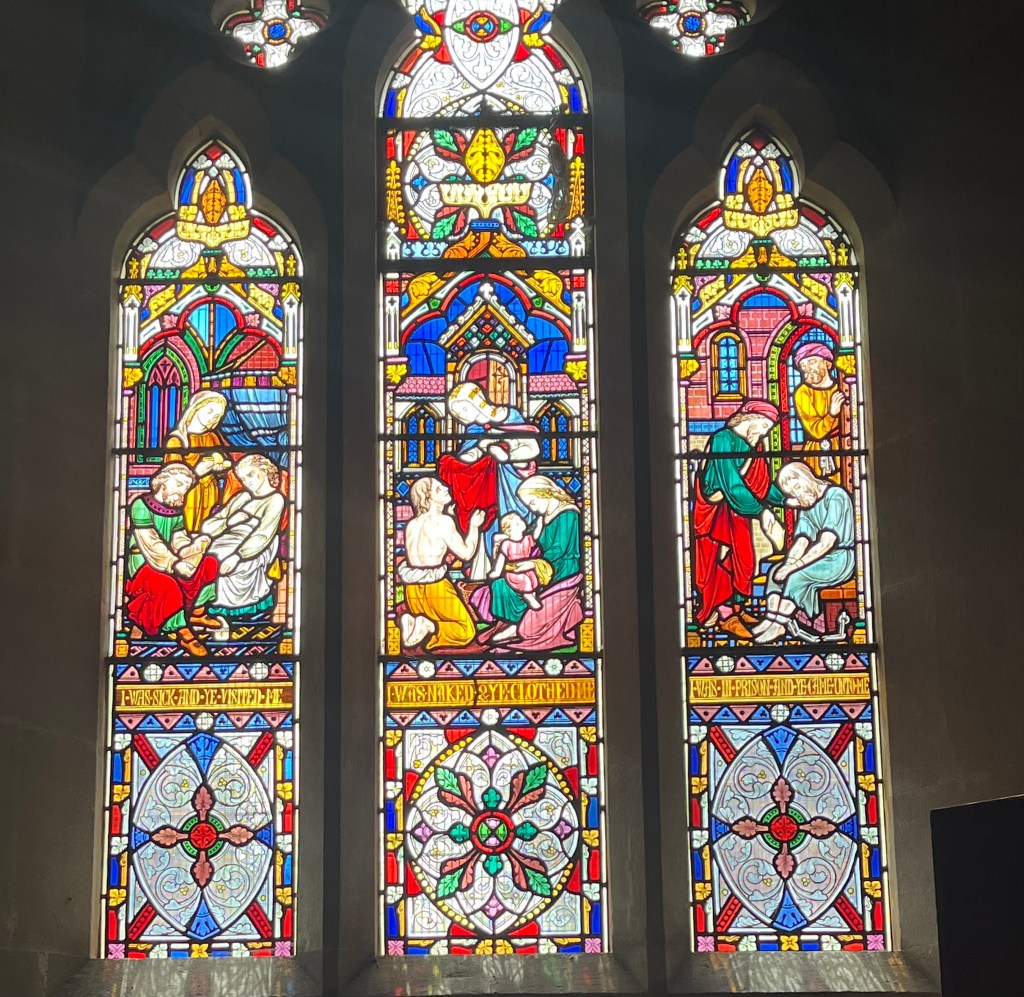
    Two stained glass windows in the church illustrate a verse from Matthew, where Jesus describes how in the last days the goats will be separated from the sheep (you want to wind up a sheep and definitely not a goat.) The first windows are inscribed with Jesus’s sayings, “I was hungry and ye gave me meat,” “I was thirsty and ye gave me drink,” “I was a stranger and ye took me in.” 

    The second windows are inscribed, “I was sick and ye visited me,” “I was naked and ye clothed me,” “I was in prison and ye came to me.”

    After hearing these sayings, Jesus is asked by those waiting at heaven’s gate, “when Lord did we see you hungry and a stranger?” And he responds, “Whatsoever you did for the least of my brothers and sisters, you did for me.” 

    It is distressing that are moving so quickly away from the direction given here and that we are moving faster every day. Who have we become? Where are we headed?

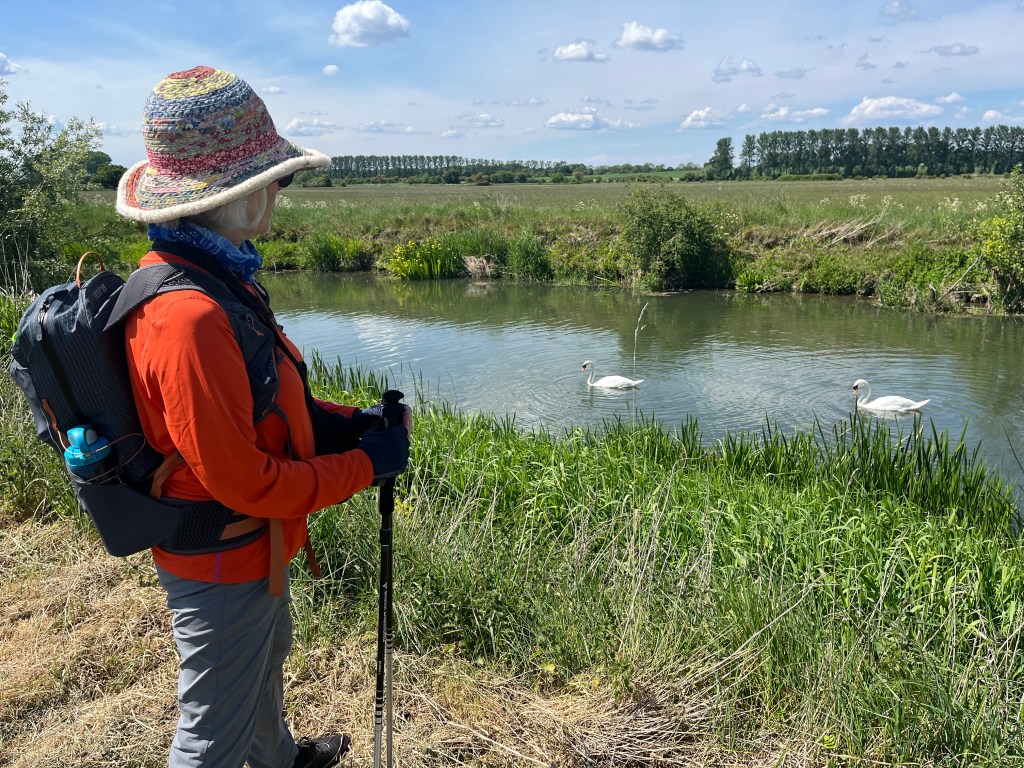
    Back in the countryside, we saw our first swans on the Thames.

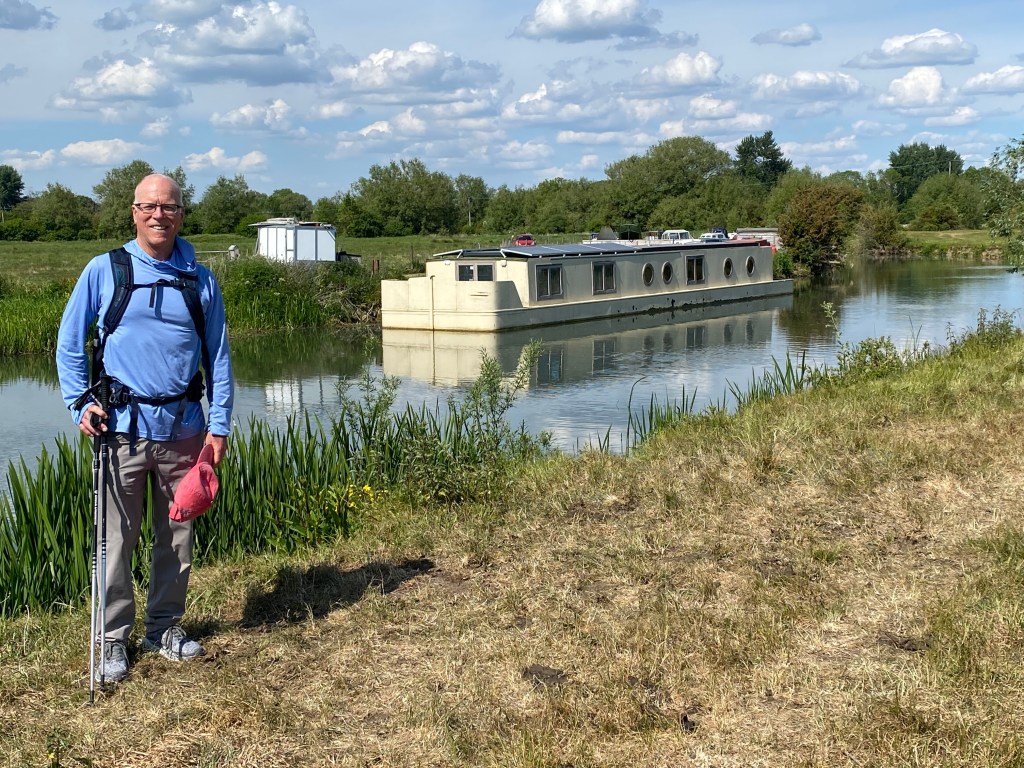
    And our first boat.

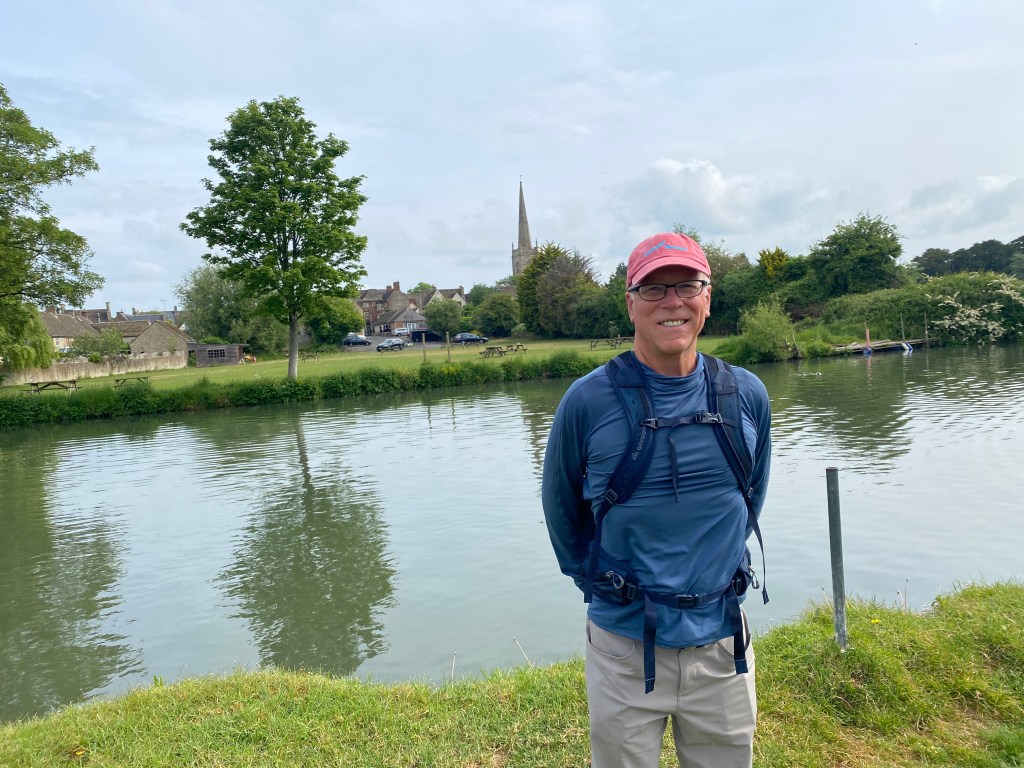
    After several hours of walking we came to Lechlade, which is dominated by the spire of the village church. We had seen it for at least a mile before arriving at the town.

    The bridge that we cross over to Lechlade is the first navigable bridge over the Thames that we have reached.

    We both have minor aches and pains. But nothing that a little rest and stretching can’t resolve. For now.

  • Day 1—Head of the Thames to Cricklade

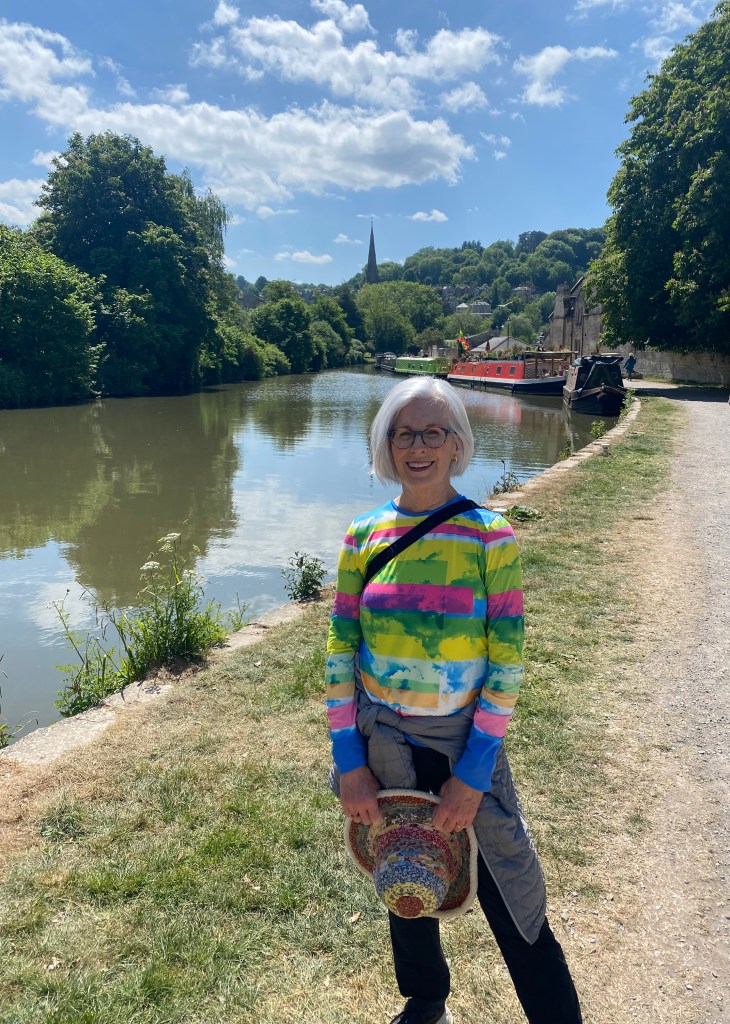
    Two days ago, Anne and I landed in London and promptly took a train to Bath. We spent the night in a hotel near the Bath train station and the next day walked along an old tow path beside the River Avon in a long arc to the village of Claverton. We left the tow path at Claverton, climbed to the top of a hill on the Bath Skyline Trail, and descended back down the hill into Bath. We had views of the city and the surrounding valley the entire way. We questioned whether a long and hard hike was wise the day before setting off on a long walk.  But the sky was blue with white puffy clouds and the sun was shining, so off we went, completely enchanted, forgetting what often befalls those falling under magic spells.  

    The next morning, the start of our 18-day walk along the Thames, we were at a highway crossing just outside the village of Kemble, a short train ride from Bath, where we had spent the night at an inn. It was cold and the sky was grey. We were walking along a busy highway to reach a trail that would take us a short distance to the source of the Thames. As cars sped past on the highway, we jumped to the side of the road and waited for an opening to hurry a few more feet down the highway towards the trail. Our enjoyment of Bath the day before had been so great that we had joked that we would look back on the trip and say that nothing equalled that first day and that perhaps we should quit while we were ahead. Dodging cars on a cold grey morning was making a prediction look keenly, too keenly, astute. After several uneasy moments, we were off the highway and onto a trail through an uncultivated field. 

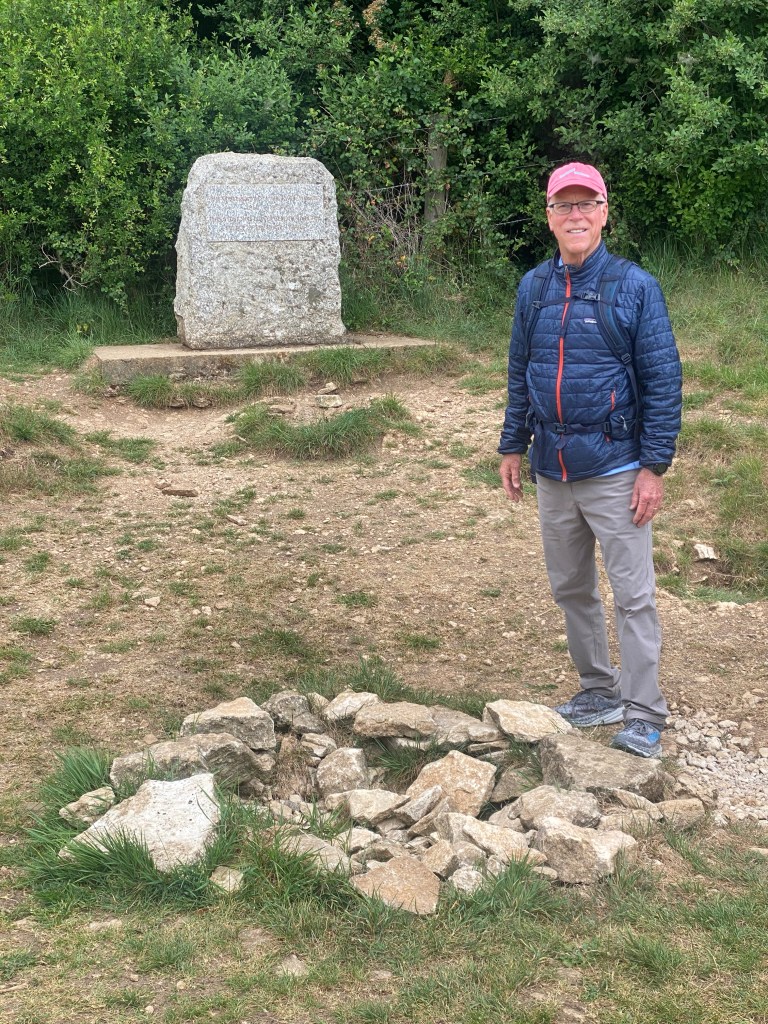
    After a short walk through farm land, we were at a plaque marking the source, which rises from a spring marked by a circle of stones. The UK has a drought, and the spring was not flowing.

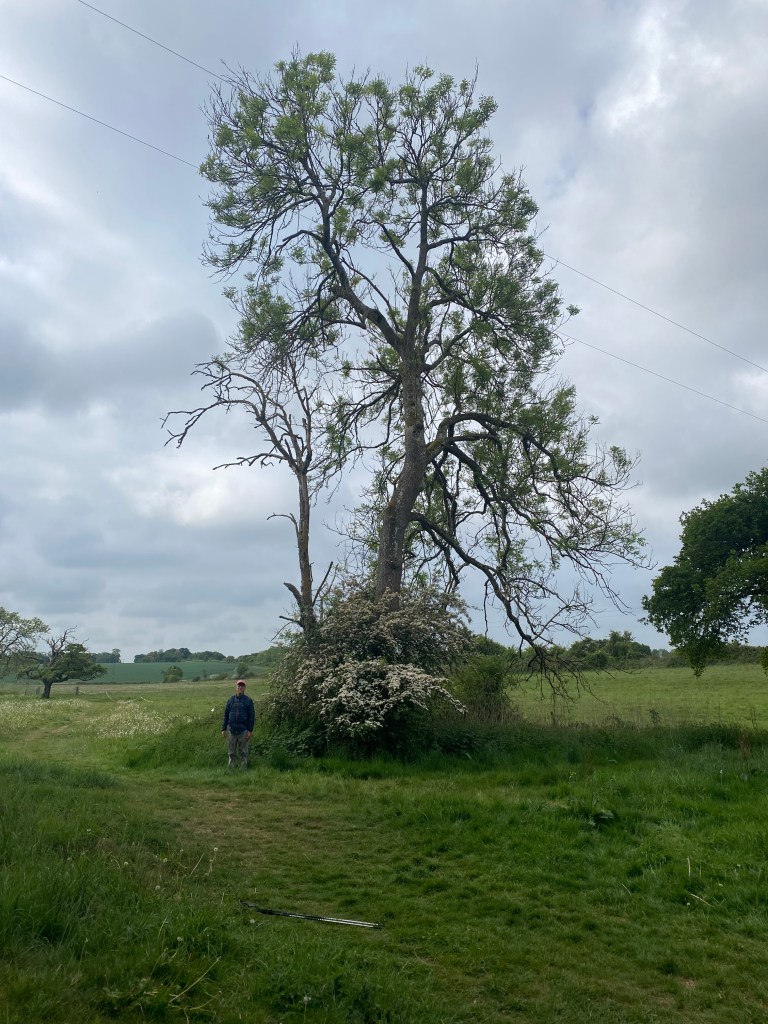
    Opposite the plaque was an old ash tree that is one of the traditional signposts of the source.

    There has been controversy over the source’s location, with some saying that it is actually located at another spring in a field that is some distance from where we were standing. As we were to learn later in the day, the Thames River Conservation Authority, which placed the plaque, hasn’t been able to quell the controversy over source’s location. 

    The Thames Path starts at the source, and as we walked down the path to begin our trip, Anne asked if I planned to write a blog during our trip. I told her no, because I had nothing to say. I was empty.  She asked why I felt that way, and I had no answer for her.

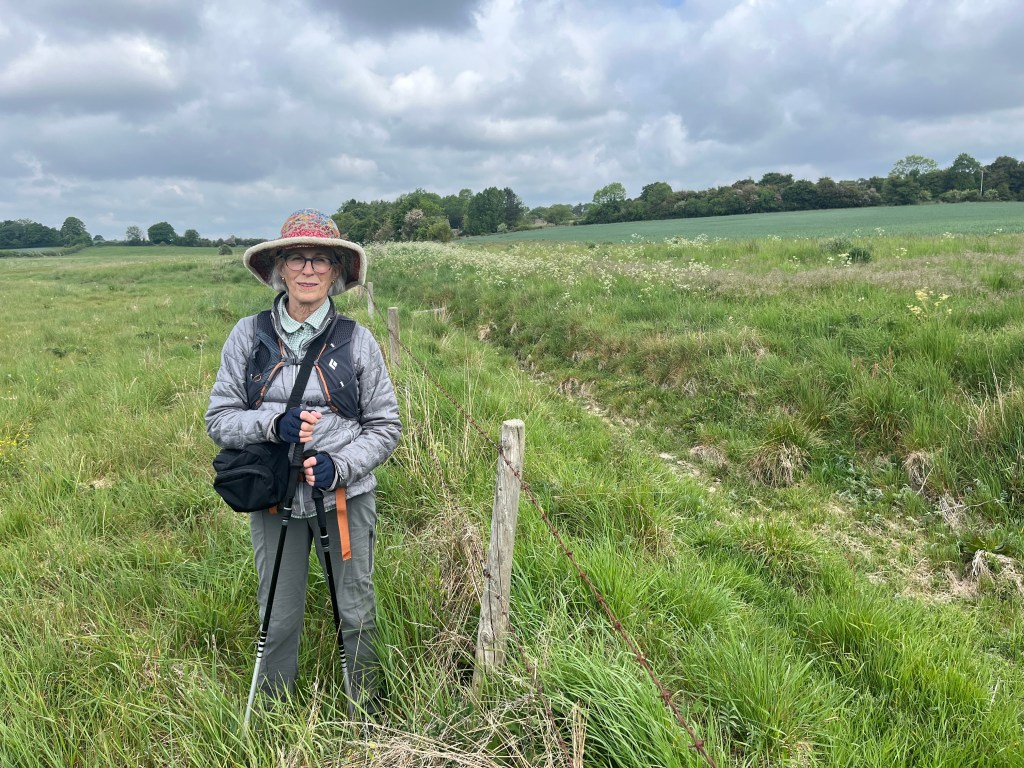
    We were walking through fields of grass. Beside us ran a dry rock-lined ditch, the beginning of the Thames. 

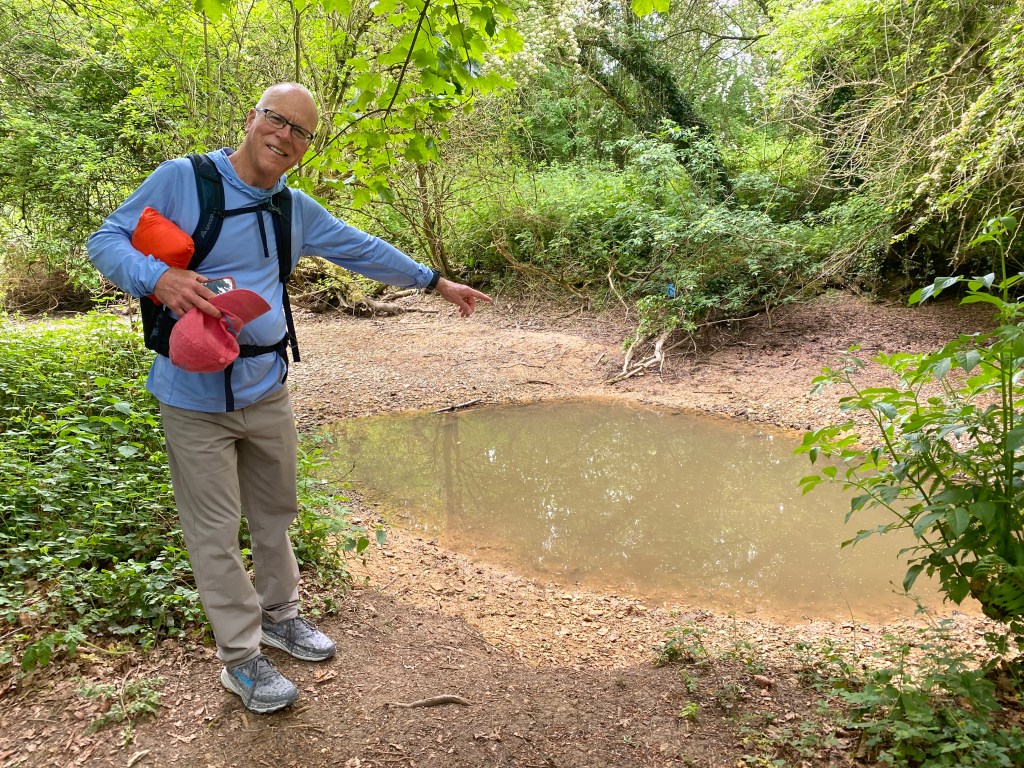
    We walked several miles before we first saw a muddy pool in the ditch. The Thame’s first surface water.

    I told Anne what was bothering me. For several months before the trip, I had been working with a group of neighbors on an affordable housing project planned for our neighborhood. I wanted the affordable housing project, to the greatest extent possible, not to cause overcrowding, traffic, and noise in the neighborhood. I wanted to focus on areas where the neighbors had a realistic chance of making meaningful changes that would benefit the neighborhood. There was a small group of very active and vocal project opponents. Despite talking with them for months, they could never articulate what their goals were, much less how they wanted to achieve them. They only wanted to criticize and destroy. In the end, I believe that that they were only interested in fighting. They were angry and abusive. They made up facts. When confronted with their misstatements, they pivoted and made up new facts. Dealing with them was frustrating and exhausting. Having lived with many of them for years, I was left feeling that I had never really known them at all, which was depressing.

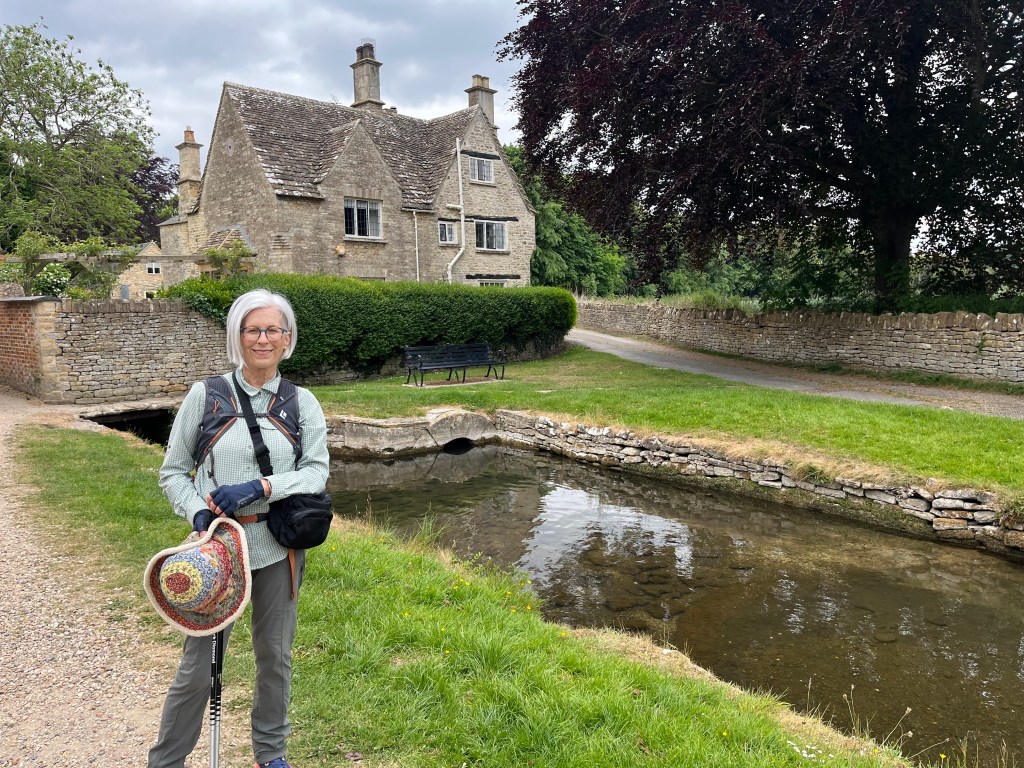
    After several miles of walking, Anne and I came to the village of Ashton Keynes where the Thames was a small stream now.

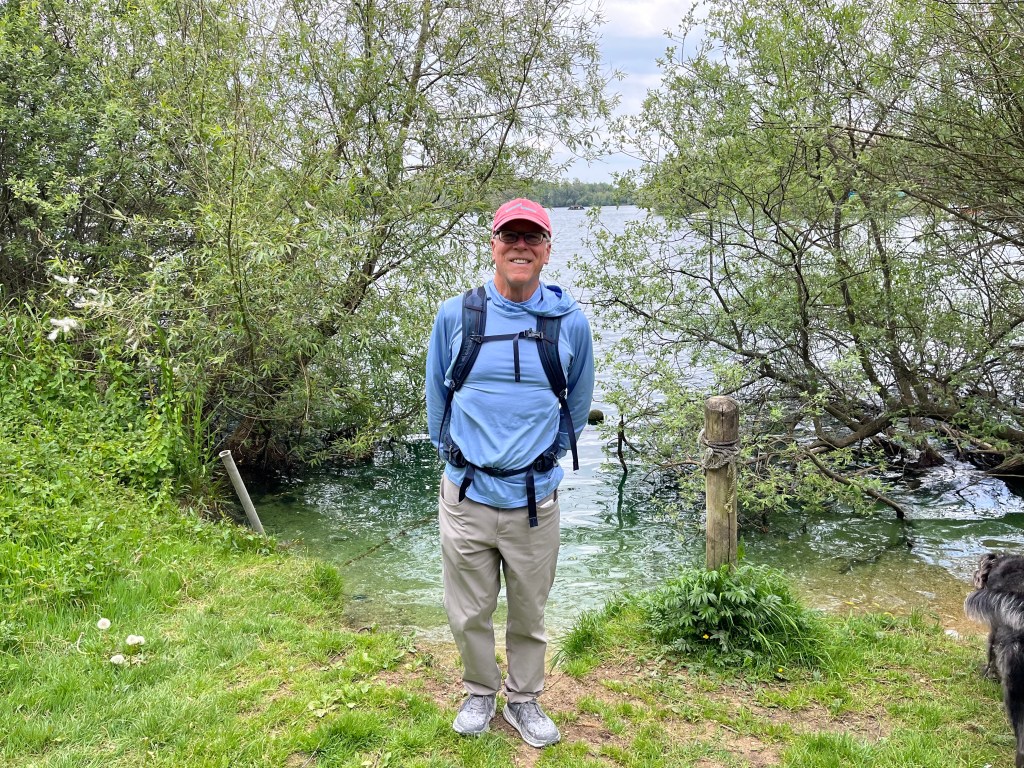
    Beyond Ashton Keynes, the Thames disappears into series of abandoned gravel pits, some of which are very large.They are now called a water park. Some are used for boating.

    It was outside one of the abandoned gravel pits that Anne and I bumped into an elderly mother and her daughter walking their dog. They asked where we came from, and we told them that we had started at the source that morning. They told us that we hadn’t started at the real source, which was a spring several miles from the plaque that the government had misleadingly put in the wrong location. We didn’t ask why the government would want to mislead people about the Thames’ source, and they never offered an explanation. 

    Leaving the water park behind, Anne and I walked through fields covered with flowers, some with farm animals.

    After almost 14 miles of walking, we reached the village of Cricklade, our first day’s destination.  We are both exhausted and have lots of aches and pains. Unfortunately, we didn’t do any consistent training for the walk. Anne was hampered by a hip injury that has only recently healed. I have no excuse for not preparing. We also no doubt are paying the price for our peregrination around Bath.  We have another longish day tomorrow, about 11 miles, and hope to get a good night’s sleep before setting out.